Osteoporosis & Bone Health | Stephenson Physical Therapy
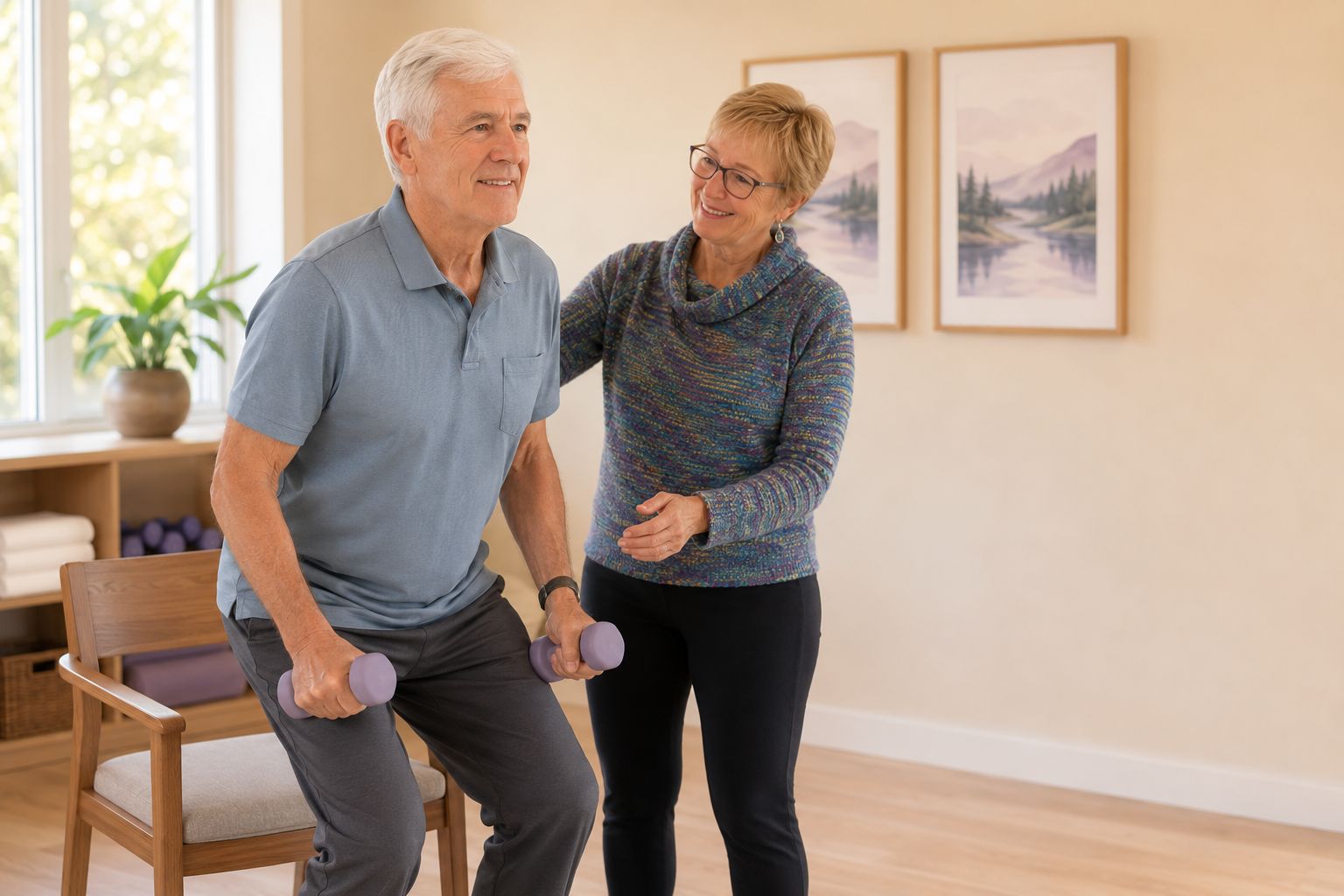
An older man builds strength with light dumbbells while his physical therapist guides his form.

Osteoporosis & Bone Health

Build Strength That Lasts.

The right exercise, done safely, is one of the best things you can do for your bones.

A diagnosis of osteoporosis or low bone density can make movement feel risky — but the answer is rarely to move less. Through safe, Pilates-based strength, posture, and balance work, I help you load your bones the way they need while protecting the areas most vulnerable to fracture.
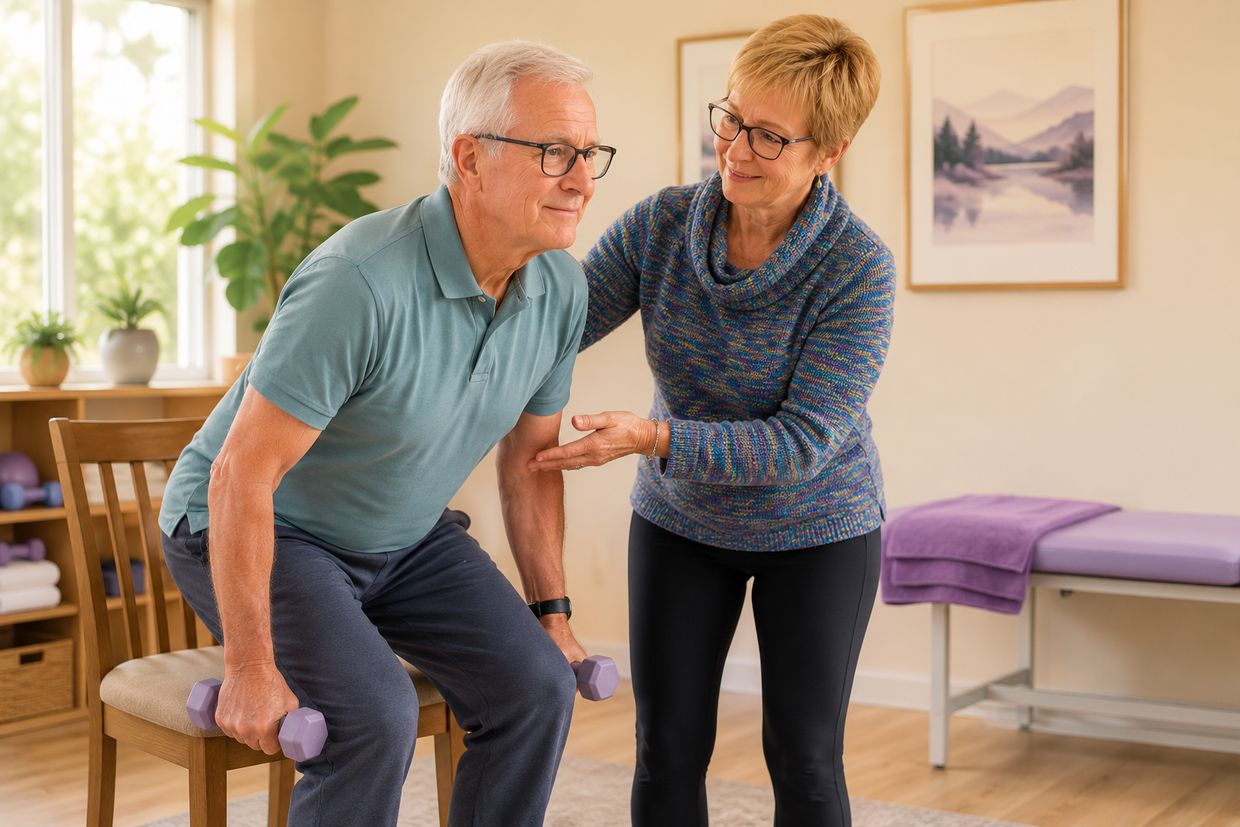

A physical therapist supports an older man through a seated strength exercise with hand weights.

Bone responds to demand: appropriately progressed resistance and weight-bearing exercise support bone density, while posture and balance training cut the fall risk that turns fragile bones into fractures. This matters especially after menopause, and for cancer survivors whose medications affect bone. I program movement that builds strength without the risky positions — like heavily loaded spinal flexion — that a low-bone-density body should avoid.

Specialized treatments

  • Safe Strength TrainingProgressive loading appropriate for low bone density.
  • Posture & AlignmentCountering the postural changes that accompany bone loss.
  • Balance & Fall PreventionReducing the fall risk that turns fragile bones into fractures.
  • Pilates-Based RehabControlled, low-impact movement that builds core and bone-supporting strength.

It is never too early — or too late — to invest in your skeleton. We start wherever you are and build from there.

What I treat

Conditions and care

Bone health

  • Osteoporosis
  • Osteopenia
  • Low bone density
  • Fracture-risk reduction

Movement & safety

  • Postural changes
  • Balance & fall prevention
  • Safe return to strength training

Good to know

Common questions

Safe, progressive strength training combined with posture and balance work is the foundation — and it’s tailored to your bone density. Just as important is guidance on which movements to approach carefully, so your program supports your bones rather than risking them.

Physical therapy supports bone health by loading bones safely and building the strength, posture, and balance that protect them. That approach helps manage osteoporosis and reduce fracture risk as part of a whole-body plan.

Pilates-based rehabilitation can be an excellent, low-impact way to build bone-supporting strength — when it’s programmed by a certified clinician who adapts the movements for low bone density and steers around the positions that don’t suit fragile bones.

Strong bones are built, not inherited.

Ready to start?